

Inspiration for Your Mandala Practice
Celtic art is known for its mesmerizing spirals, intricate knotwork, and deep connection to nature. When I explored this beautiful art form, I immersed myself in the process of learning and interpreting its timeless patterns through mandala-making.
One of my go-to resources is Celtic Art: The Methods of Construction by George Bain (Dover Books). His clear, step-by-step illustrations offer a gateway into understanding the construction behind classic Celtic designs.

My Celtic Spiral Study
Inspired by Bain’s techniques, I began a spiral study using earthy tones: terra cotta, goldenrod, bronze green, and avocado. These colors echoed the natural spirit of Celtic spirituality. As I repeated the spirals, I developed a feel for the rhythm and geometry of this tradition.

For my final mandala, I combined different Celtic spiral motifs into a unified composition. I started with a central circle and layered three mid-sized circles with companion smaller ones. Each design was drawn freehand, referencing my earlier studies and Bain’s book for inspiration. I later added a cool gray-blue for contrast and depth. The result was deeply satisfying—creating a Celtic mandala that felt entirely my own.
While working on this piece, I listened to A Celtic Pilgrimage with John O’Donohue. His voice, paired with the evocative landscape, added a sacred energy to my creative process. A favorite quote from O’Donohue guided my spirit:
“May you experience each day as a sacred gift woven around the heart of wonder.”

Practicing Celtic Knotwork
To explore knotwork, I studied the six-trefoil knot in a hexagon formation. While it may appear complex, it’s surprisingly approachable with the right instruction. I recommend searching for Celtic knot tutorials on YouTube. Learn the basics, then practice, refine, and eventually create your own pattern variations.
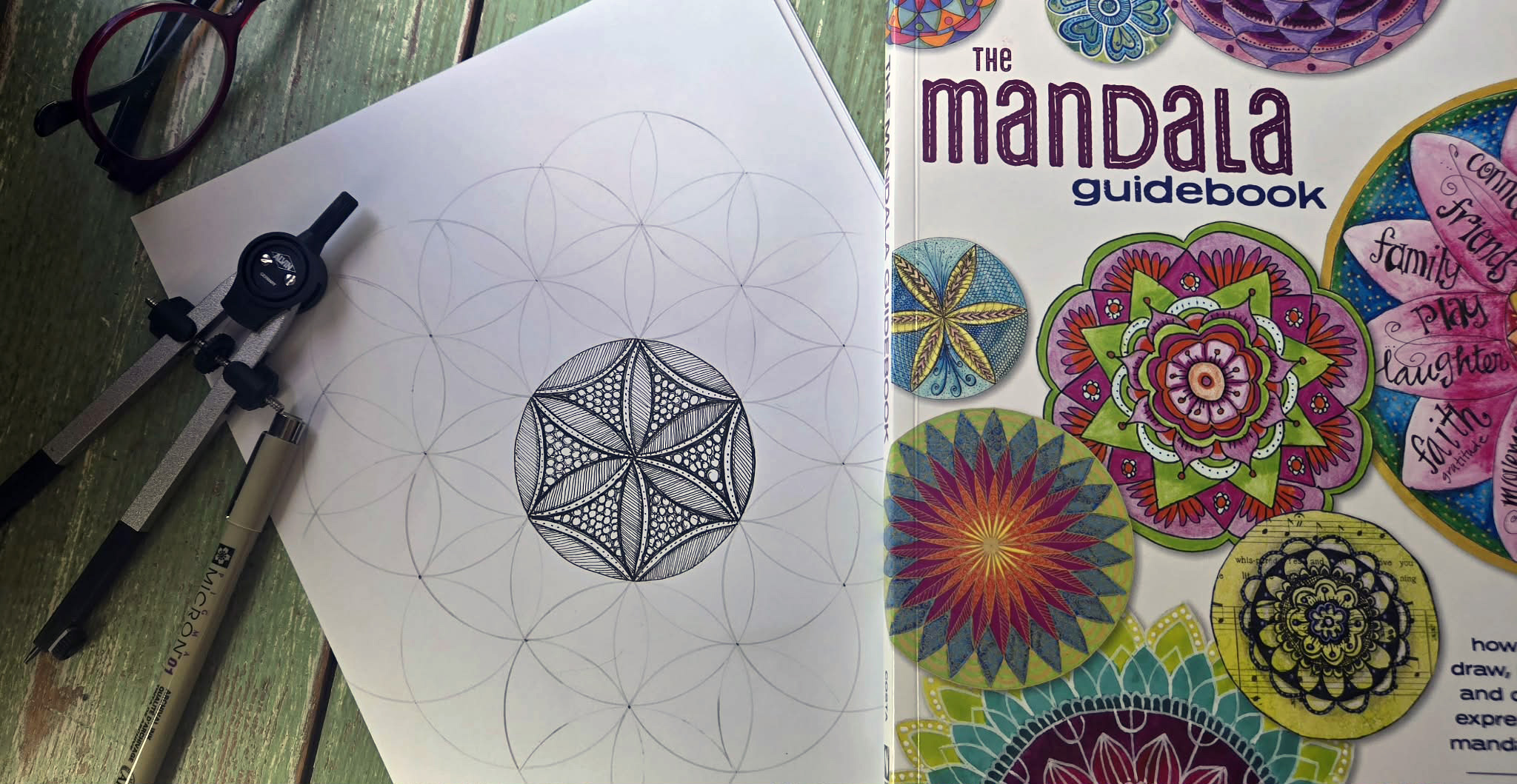
Want step-by-step guidance on drawing mandalas—including Celtic designs?
You’ll find a full section on this topic in The Mandala Guidebook.
Materials I Use
Here’s a list of the materials I used in my Celtic mandala projects:
- Mechanical Pencil: Ideal for fine lines and spiral precision.
- Click Eraser & Black Pearl: Great for small and large corrections.
- Markers & Pencils: I used a mix of Prismacolor markers and colored pencils.
- Charcoal Pencil & Blending Stump: For depth and shadow effects.
- Bristol Board: My preferred surface for smooth, detailed illustrations.
Use what you have on hand—there’s no one-size-fits-all approach. Celtic art invites experimentation.
Let Celtic Art Inspire You
I always encourage my students to copy during their learning phase—this is how we internalize visual language. But when it’s time to create a final piece, gather your favorite elements and reimagine them into something new. That’s where the true magic happens.
If you’re inspired by another artist’s work, give credit. If you’re moved by tradition, bring your own story into the design. The joy of creating your own Celtic mandala is an experience like no other.
Celtic Mandala Gallery
Discover how other artists have explored Celtic patterns through their own unique mandala practices. This post was originally published in 2015. It is a timeless topic and a fan favorite.

“A Blessing”
Angella de Jager, South Africa
Medium: White cardstock and various black markers
“Wow, I found this theme challenging! I don’t usually work with intricate designs because my hands are shaky. And going black and white was way out of my comfort zone—I’m all about color. But once I finished, I was so thrilled. I may just make more black and white mandalas!”
Angella is a self-taught artist and longtime arts and crafts instructor. She fell in love with colorful mandalas.

“Untitled”
Maria Mercedes Trujillo A., New Zealand
Medium: Watercolor and ink on paper
“I enjoy playing with colors. I make art for fun and to feed my soul.”
Maria’s work radiates joy and soulful creativity. She shares her art as part of a personal journey of exploration and expression.

“Untangle and Fly”
Patricia J. Mosca, New York, USA
Medium: Acrylic paint and Sharpie on watercolor paper
“There are times in life when you feel tangled up… but you must always remember… only you can untangle yourself and fly.”
Patricia is the author of Permission Slips for Your Heart and Soul. Her mandala journaling practice has been featured in several national magazines. She paints mandalas to listen to the whispers of her heart.

“Family”
Neomi Mor, Israel
“This mandala represents the complex relationships within the family and the sense of unity and interconnectedness.”
Neomi is a mother of three and former banker who now studies naturopathy. She enjoys travel, good food, and above all—painting mandalas.

“Time Before and After”
Fabienne Tossi, Switzerland
Materials: Unipen fine liner, Sharpies (yellow, orange, red), and Faber-Castell watercolor pencils
“This mandala is about standing at a crossroads between ancient times and modernity—between the wish to stay connected to the past and the desire to progress without forgetting what the past offered you.”
Fabienne is a freelance translator in Geneva. She raises awareness about harmful trends among youth and supports people nearing end-of-life. Mandalas became part of her life through meditation.
Keep Exploring
Want step-by-step guidance on drawing mandalas—including Celtic designs?
You’ll find a full section on this topic in The Mandala Guidebook.
Share your art!
We’d love to feature your mandala in a future gallery here at True North Arts. Subscribe to the True North Arts newsletter for upcoming invitations to contribute!


You must be logged in to post a comment.